
Is Jordan Safe to Visit Right Now? Flights, Airspace & What Tourists Should Do (2026)
Practical Jordan travel update for UK, Poland & US: safety guidance, flight/airspace changes, refund rules, what to do if stranded, and smart Plan B routes.
JORDANRECENT


Why we wrote this (Our personal experiences of living in Jordan)
The purpose of this post is not to convince anyone that Jordan is an ideal holiday destination right now, nor to encourage people to come here. We are all aware that the country is located in a region affected by a serious conflict. There is no point in repeating obvious information that anyone can check in official travel advisories, on embassy websites, or in the news. Travel to Jordan is currently discouraged, and that is a fact.
However, questions about the current situation still appear regularly in this group. As someone who lives in Jordan, I can only share my personal experience and a few factual observations, without trying to persuade anyone to travel here.
We live in Amman and for about three years we have been feeling the consequences of the tense situation in the region. This mainly relates to cancelled flights, additional travel costs, and a significant drop in tourism.
It is also a fact that since the beginning of the war there have been no civilian fatalities recorded in Jordan. Even during moments of heightened tension, such as the incident near the U.S. Embassy, authorities and institutions had time to implement appropriate safety procedures.
Jordan is not a party to this conflict and is not a direct target of it. Despite the difficult situation in the region, daily life here remains calm and stable, which is why at no point have we personally felt that our lives were in real danger.
Of course, hearing sirens, fighter jets, or missiles passing through Jordanian airspace is not something that feels completely normal. But from our perspective, everyday life continues. Tourism still functions, the country operates normally, attractions remain open — there are simply far fewer visitors than usual.
From a traveler’s perspective, the biggest concern today is usually not the stay itself, but whether the return flight will take place as planned, whether it might be cancelled, and what the alternatives would be in such a situation. That is something that should be taken seriously.
If someone asks me simply what the situation looks like on the ground, my answer is straightforward: I live normally, travel around the country, and do not live with a constant sense of danger.
We live in a world full of uncertainty and risks. If I personally allowed fear to guide all my decisions, I would probably never travel anywhere. But that is just my approach. In the end, I believe everyone should make their own decisions according to their own judgment and comfort, without feeling pressured by others.
So this post has two goals: help you make smart, calm decisions about safety and flights using official information, and give practical advice if your plans change — without panic and without pretending the situation can’t affect travel.
Polish summary (PL) — szybkie info dla Polaków
Czy Jordania jest teraz bezpieczna? W wielu miejscach turystycznych życie działa normalnie, ale sytuacja w regionie jest dynamiczna i wpływa na loty i przestrzeń powietrzną.
MSZ podniosło ostrzeżenie dla Jordanii do poziomu 4 („odradza wszelkie podróże”) i zaleca rejestrację w systemie Odyseusz.
Jeśli jesteś już w Jordanii i masz odwołany lot: kontaktuj się z linią lotniczą (rebooking/refund), sprawdź ubezpieczenie oraz monitoruj komunikaty ambasad i służb.
What’s happening and why travel plans are disrupted
Regional escalation has raised security concerns across the wider Middle East and has caused travel disruption, especially around aviation planning and sudden schedule changes.
Official travel advice for Jordan explicitly warns about regional escalation and disruption, and recommends monitoring alerts and following local authorities.
Is Jordan safe for tourists right now?
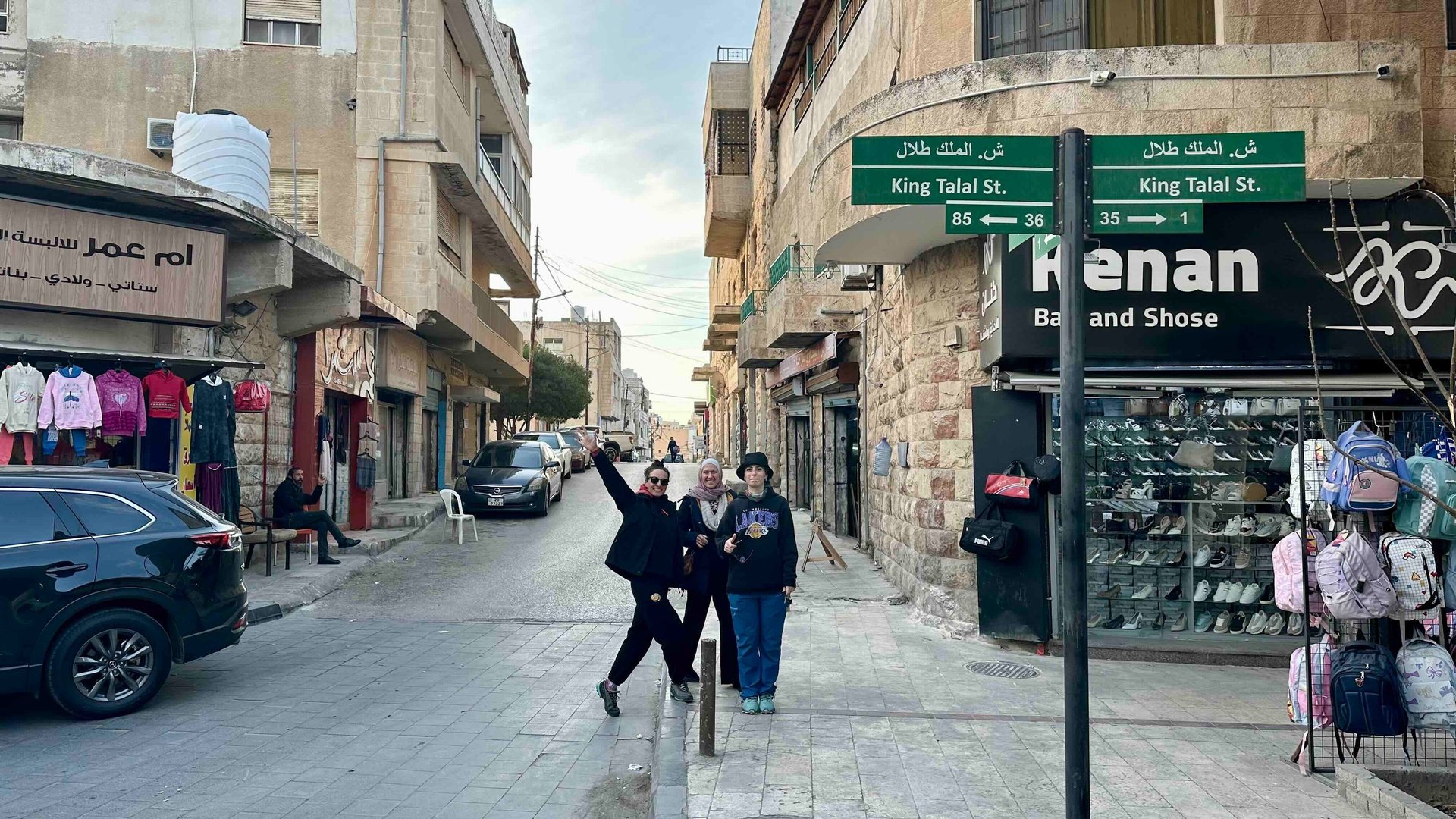
A realistic answer is this: daily life in Jordan continues largely as normal for both Jordanians and expats. We have not seen evidence of people rushing to leave the country.
As active members of travel groups on social media, we have also recently seen many comments from tourists who visited Jordan during this period saying that their trips were successful and that they felt safe. Many travelers are still planning to visit Jordan, provided their flights are not cancelled.
Tourist areas such as Amman, Petra, Wadi Rum, the Dead Sea, and Jerash continue to operate normally. However, the situation remains dynamic, and trips can still be affected by airspace closures, flight cancellations, or changes in official travel advisories.
For most travelers, the biggest concern at the moment is flight disruption and travel insurance, not immediate day-to-day danger in tourist areas.
During the recent escalation, Jordan did not report fatalities among its citizens caused by incoming missile strikes. Reported injuries were limited and were largely linked to falling debris or intercept fragments rather than direct impact.
Most debris that fell on Jordanian territory was reported in the Irbid area, far from the airport and the country’s main tourist attractions.
This does not mean there is no risk, but it does help put the situation into perspective. For most visitors, the main issue remains travel disruption rather than movement within Jordan’s main tourist destinations.
There are also alternative ways to leave Jordan, which we explain later in this article.
That said, this is still a time of uncertainty, and each traveler should make a decision based on their own judgment, comfort level, and risk tolerance.
What UK, US, and Poland are saying
Different countries use different wording and advisory systems in their official travel guidance, so the stated “risk level” may vary depending on your nationality.
It is important to remember that governments are responsible for the safety and welfare of their citizens, which is why official travel advice is usually written with a high degree of caution and with worst-case scenarios in mind.
UK (FCDO): They’re basically saying: travel only if it’s essential, and avoid certain border areas. They also warn that the situation can change quickly and flights may be disrupted.
US (State Dept / U.S. Embassy): They’re saying: reconsider travel, and they publish security alerts and practical updates (including airport/flight situation).
Poland (MSZ / gov.pl): Their warning is the strongest: they advise against all travel to Jordan, and they recommend Polish citizens register in Odyseusz.
What this means for you: travel advice is always written on the safe side. Use it to understand the level of disruption and risk — then decide based on how flexible you are, whether your bookings are refundable, and how stable your flights are.
Rockets vs Airliners: Why Flights Get Cancelled
We won’t go into rocket science here — but understanding altitude helps explain why flights get disrupted even when you can still visit Petra or Wadi Rum normally.
Many missiles and interceptors can climb extremely high after launch — in some cases up to around 400 km altitude — meaning they operate for part of their trajectory in sub-orbital space rather than in the same air layer as commercial flights. Commercial passenger aircraft cruise much lower — typically around 9–12.5 km (30,000–41,000 ft). In other words, they don’t “share the same lane” in the sky during normal cruise.
So why do airlines become more cautious?
The main concern is not a direct collision between a missile and a passenger aircraft. The greater risk comes from uncertainty during sensitive phases of flight, such as ascent, descent, military interceptions, or debris falling back into controlled airspace. Even when the chance of a direct incident is low, airlines and aviation authorities usually take a conservative approach whenever the situation is unclear.
Pilots also maintain real-time communication with air traffic control (ATC) and can adjust altitude or change route whenever necessary. This is one reason there are no known reports of commercial aircraft and rockets accidentally colliding in mid-air.
And cancellations aren’t only about sky risk. A big driver is demand + advisories: when travelers avoid the region and foreign advisories warn about disruption (including the risk of getting stranded), airlines — especially budget routes — reduce frequency or suspend flights.
Bottom line: Jordan can feel normal on the ground while flights remain the fragile part of the trip.
Budget airlines (Wizz Air & Ryanair)
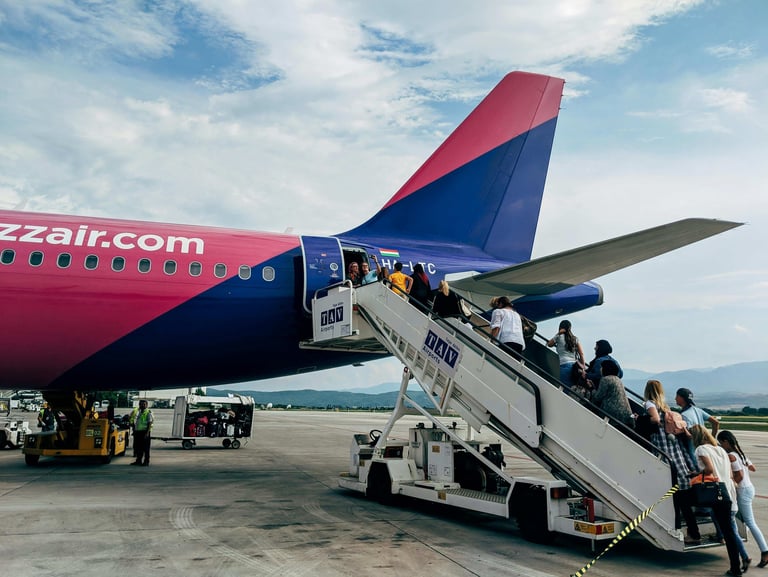
f you’re flying with low-cost airlines, be extra careful during regional disruption because schedules can change fast. Wizz Air has already cancelled flights to and from Jordan, and Ryanair has also cancelled flights until the end of March.
The practical takeaway is simple: treat your booking as “not guaranteed” until the flight really take off!
What to do:
Check your booking status inside the airline app every day (especially in the last week before travel).
Avoid paying for non-refundable hotels, tours, or transfers until your flight is confirmed. You can safely book everything on arrival to Jordan as there is not many tourists in Jordan at the moment.
Screenshot any cancellation or rebooking message (useful for refunds/insurance)
If your flight is cancelled and you’re stuck in Jordan: step-by-step checklist
Step 1: Stabilize today:
Extend your accommodation now, not later.
Keep your passport, medication, bank cards, and other essentials ready.
Do not rush to the border or the airport without confirmed information.
Step 2: Use these channels in parallel:
Contact the airline for rebooking or a refund. Try the app, live chat, and phone support. Keep in mind that some airlines may continue cancelling future flights as well, especially if this has already been happening repeatedly. For example, if an airline has been cancelling flights every few days, there is a real possibility of further disruption. Also, the fact that tickets are still being sold does not guarantee that the flight will operate.
Check alternative travel options before accepting rebooking, especially if getting home quickly is important.
Contact your travel insurance provider and ask specifically whether your policy covers conflict-related disruption.
Monitor embassy alerts such as UK FCDO updates, U.S. Embassy security alerts, or Poland’s MSZ and Odyseusz notices. Check whether your embassy is organizing assistance or evacuation for citizens. This happened during last year’s 12-day conflict.
Follow official updates in addition to local news coverage.
Step 3: Keep all receipts and written proof:
If you have to pay for accommodation, transport, or other necessary expenses because of travel disruption, keep all receipts and written evidence of what the airline offered or refused. Refund and rerouting rules vary, but good documentation always strengthens your case.
Leaving Jordan Options if Flights from Amman Are Cancelled
Option 1: Aqaba ferry to Egypt (Nuweiba, Taba, Shaem el Sheikh), then fly from Cairo.
For example, some tourists used this exit route: Aqaba → ferry to Nuweiba (Egypt) → travel to Cairo → fly home. This works because the Aqaba–Nuweiba ferry is a main connection between Jordan and Egypt.
Before you choose this option:
Ferries can be delayed and border procedures can take time
Your passport usually needs at least 6 months validity
Check if you need an Egypt visa (don’t assume you can enter easily)
Confirm the ferry schedule first and leave buffer time (don’t book a tight next-day flight)
Many tourists chose this option at the beginning of the war, but it turned out to be a long and tiring journey with multiple security checks. It was also not a particularly cheap way to return. Based on reports shared in travel forums, the average cost of getting back to Poland was around 400 JOD per person, although prices varied.
For that reason, it is worth comparing this route with available flights from Jordan, including Royal Jordanian Airlines connections to London, Vienna, and other European cities. While Royal Jordanian is often on the expensive side, we found tickets for our guests for under 80 JOD per person on the Amman–London Stansted route.
Do it smart: confirm your airline options first (refund/rebooking), then check ferry availability and Egypt entry rules, and treat this as a multi-step journey—not a quick same-day escape.
Option 2: Fly out with Royal Jordanian to a hub (like London), then take a cheap flight home.
When budget airlines cancel, one workaround is to book a Royal Jordanian flight from Amman to a major hub (for example London), then buy a separate cheap ticket from that hub to your final destination (Europe or the U.S.).
Important:
This is two separate tickets. If the first flight is delayed, the second airline usually won’t wait for you—so leave a big time buffer (many hours or even overnight). If the tickets from mid-stop destination are not very expensive, you can even buy them on the airport, once you confirm your plane from Amman is on time.
Check whether your passport needs a transit visa for the hub country (like the UK requires ETA which cost 16 GBP per application, children included).
Compare the total cost with waiting for your airline’s rebooking/refund—sometimes this option saves time, sometimes it’s expensive.
Keep screenshots and receipts in case your insurance asks, but don’t assume insurance will pay for self-booked flights.
This option is best if you need to get home fast and can handle the extra steps.
Compare Exit Options Calmly (Don’t Panic and Follow the Crowd)
When flights get cancelled, tourist Facebook groups become full of advice like “go to Aqaba” or “the ferry is the only way.” Don’t treat social media as instructions. Treat it as one option to consider, then check what actually works for your situation.
Real example: A Polish family of five got stuck in Jordan and almost followed the crowd to do Aqaba → Egypt → Cairo → flights to Europe → another flight to Poland. We advised them to compare another option first: Royal Jordanian to London, then a cheap ticket from London to Poland. It ended up much cheaper — they saved around €1,500.
Simple rule: don’t rush.
Check 2–3 exit options
Verify passport/visa rules
Calculate the full cost (tickets + transport + hotels + buffers)
Then choose the cheapest and safest option
Moving fast without doing the math is how people waste a lot of money.
What after your flight has been cancelled?
This is where many travelers get confused, so let’s keep it simple.
1) If the airline cancels your flight, you usually have 2 main options:
Option A: Get a refund.
Option B: Accept another flight offered by the airline, often called rebooking or rerouting.
That is the basic principle. If the airline cancels your flight, you should not simply lose the value of your ticket.
2) A refund is not the same as compensation:
A refund means you get back the amount you paid for the ticket, or the unused part of it.
Compensation means additional money beyond the refund. This may be described as monetary compensation, while reimbursement of expenses refers to costs such as transport, meals, or accommodation you had to cover because of the disruption.
In situations related to war, security risks, or airspace disruption, airlines often rely on the argument of extraordinary circumstances to reject compensation claims. In Jordan, this can be a grey area because the airspace may remain open while some flights are still cancelled or rescheduled.
3) What this means for UK, EU, and US travelers:
UK and EU travelers: If your flight is covered by UK or EU passenger rights rules, the airline should normally offer you a choice between a refund and an alternative flight when it cancels your booking. Compensation may depend on the reason for the cancellation and how much notice you were given, but the refund or rebooking choice is usually the most important immediate right.
US travelers: If the airline cancels your flight, or makes a major schedule change that you do not accept, US Department of Transportation rules generally support your right to a refund, especially if you booked directly with the airline.
4) Budget airlines such as Wizz Air and Ryanair may push vouchers:
Low-cost airlines often try to steer passengers toward travel credit or vouchers. In some cases, that may be useful. However, if you want your money returned to your original payment method, you usually need to select the refund option carefully in your booking account or customer panel.
5) What to do immediately after a flight cancellation:
Take screenshots of the cancellation notice and your booking details.
Log in to the airline’s manage booking section and choose either a refund or rebooking option.
Keep all emails, receipts, and travel documents. This includes hotel, food, and transport costs in case you need them later for insurance or reimbursement claims.
6) If you do not want to handle the claim yourself:
Sometimes a refund or compensation claim turns into a long and frustrating process involving forms, deadlines, and vague responses. If you do not want to deal with the airline directly, you may consider using a third-party claim company that handles the process in exchange for a fee or percentage.
Applying directly with the airline can have disadvantages. We know that from personal experience. It is important to check whether the airline applies any time limits to submitted claims and whether there is an expiry period for documents or appeals. In many cases, airlines rely on the phrase extraordinary circumstances when replying to individual passengers.
In our case, the airline rejected our claim when we applied directly. Later, we received compensation after being represented by a third-party company.
From our personal experience, one company that helped us was RitAir. This is not a sponsored recommendation. It is simply a service that worked in our case. As always, read the company’s terms, fees, and conditions carefully before using any third-party claim service.
Practical cheat sheet (what you can usually do):
Date change after cancellation:
RJ: often yes (no penalty, possible fare difference)
Ryanair: yes, typically “same route” date/time changes offered.
Wizz: yes, within their rebooking window / policy.
Destination change after cancellation:
Usually not “free” for any of them.
It’s normally treated as:
new booking, or
ticket reissue with fare difference,
unless the airline publishes a specific waiver.
What to do in Jordan while waiting (low-stress options)
Here is the stronger version. Your original text had decent ideas, but the English was uneven and the last paragraph was too messy to publish as it was.
If you are stuck in Jordan for a few extra days, choose plans that are easy to cancel, close to Amman, and low-risk logistically.
Good options many travelers choose include:
Amman: downtown, the Citadel, museums, and food walks
Jerash as a day trip
Local activities in or near the capital
Madaba, Mount Nebo, and the Dead Sea, weather permitting
The Dead Sea, especially if you already know where to float safely and what to avoid.
Avoid committing to long, non-refundable itineraries if your flight status is still uncertain.
We also want to highlight the kindness and hospitality shown by many Jordanians during periods of travel disruption.
Even in times of uncertainty, and despite facing loss of income, many locals offered stranded passengers shelter in their homes. In Wadi Rum, some camp owners welcomed tourists free of charge while they waited for transport home.
These acts of solidarity gave many travelers a greater sense of safety during a stressful and unfamiliar situation, reminding them that they were not alone and that local support was available.
How Jordan tourism is being affected (what we’re seeing)
Jordan tourism gets hit hard by perception and aviation disruption, even when daily life in tourist areas continues as normal. When airlines suspend routes (even temporarily), bookings drop and itineraries shorten.
If you’re visiting during this period, you’ll likely find:
more last-minute availability
fewer crowds in major sites
more businesses eager for bookings
Support local businesses—but don’t ignore official guidance.

How to Support Jordan Responsibly (Without Taking Risks)
If you decide to keep your trip to Jordan, you can support local people in a way that’s meaningful without doing anything unsafe or political.
Book locally where it makes sense: choose locally owned guesthouses, small hotels, family-run restaurants, and local guides/camps (especially in Petra, Wadi Rum, Madaba, and the Dead Sea area). Even small spending spreads quickly through communities.
Avoid non-refundable commitments: support the economy, but don’t lock yourself into plans you can’t change if flights or advisories shift. Choose refundable accommodation where possible.
Pay fairly and tip respectfully: if someone helps you (driver, guide, hotel staff), small tips matter a lot during low-season periods, especially when tourism drops suddenly.
Be a low-impact traveler: keep sites clean, don’t damage nature (especially wadis/canyons and the Dead Sea shoreline), and respect local norms.
Share accurate information: if friends ask “is it safe?”, point them to official sources and practical guidance—not rumors. That helps Jordan more than exaggerated fear or blind optimism.
The goal is simple: enjoy Jordan responsibly, support local livelihoods, and keep your decisions guided by official updates and common sense.
We wish you safe and uninterrupted travels. Although if you need any support or advise, do not hesitate to reach out. We are happy to help


FAQ (Frequently Asked Questions)
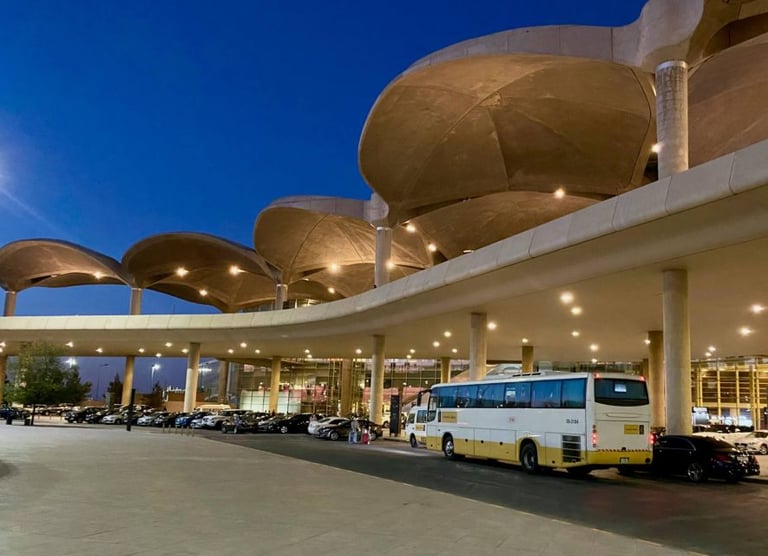
Is Queen Alia Airport operating?
The U.S. Embassy has stated commercial flights are operating (but this can change). Always verify with your airline.
Are Petra and Wadi Rum open?
Often yes, but confirm locally and stay away from sensitive border areas; follow official travel advice updates.
If my airline cancels my flight, can they refuse a refund because of war?
Refund/rebooking rights generally still apply when the airline cancels; “extraordinary circumstances” usually affects compensation, not the refund/re-route choice.
What should I do first if my flight is cancelled?
Extend accommodation, contact airline for rebooking/refund, then insurance, then monitor embassy updates.
What does Poland’s MSZ say right now?
MSZ has issued Level 4 (“odradza wszelkie podróże”) and recommends Odyseusz registration.
Get in touch


Home | Jordan | Blog | Services | About | Contact | Privacy Policy | Terms of Use | Refund & Payment Policy
© 2026 Travel Couple